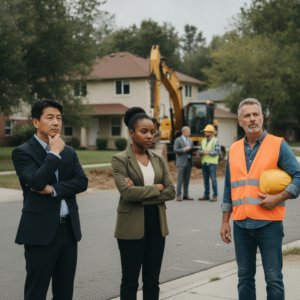
Ever wondered what happens when the government needs your property for a public project? Or what your rights are if a new road or utility line affects your land? These questions often come up in small towns across the country. Today, we’ll take a friendly, straightforward look at two important legal ideas: eminent domain and inverse condemnation. You’ll learn how eminent domain tools work, how they’re different from inverse condemnation, and what you should know if your property is involved.
Understanding Eminent Domain: The Basics
Eminent domain is the government’s legal power to take private property for public use. This could mean building a new school, widening a road, or installing water pipes beneath your street. The key point is that the government must offer “just compensation” – a fair price for your property based on its value.
Eminent domain tools refer to the laws, procedures, and steps that local, state, or federal governments use to make this process happen. Most eminent domain cases start with a formal notice to the property owner. You’ll receive details about why the project is necessary, how your property will be affected, and what the government is offering to pay.
If you agree to the offer, the process is pretty straightforward: you’re paid and the government takes over the property. But if you don’t agree, you have the right to challenge the offer, or even the need for the project, in court. This legal process is called “condemnation.”
Let’s use an example. Suppose a city wants to build a new fire station and needs part of your backyard for the building. You’d get a written notice, an appraisal of your property, and an initial offer. If you think the offer is too low, you can negotiate or request another appraisal. If there’s still no agreement, the matter may end up before a judge, who decides what’s fair.
A useful tip: Always read any notice from the government carefully and consider talking to a trusted advisor or attorney before making any decisions. The rules can be tricky, and it’s important to make sure you’re being treated fairly.
What Is Inverse Condemnation?
Inverse condemnation flips the usual script on property rights. In this case, it’s not the government starting the process. Instead, you as the property owner take action because the government has caused damage or taken your property rights without following the normal eminent domain tools or paying you fairly.
Imagine the government builds a highway nearby. The construction changes the direction of rainwater, and now your property floods every time there’s a heavy storm. Or, a new city project blocks the only road to your small store, hurting your business. If the government didn’t offer you compensation or file an official condemnation, you might have a case for inverse condemnation.
With inverse condemnation, you’re asking the court to recognize that your property has been “taken” in a legal sense, even if you still technically own it. You’re seeking fair compensation for the harm done, which might include lost property value, lost income, or costs to repair damages.
But here’s where it gets tricky. Not every negative impact from a government project counts as a “taking.” Courts look at the facts: Did you lose all use of your land? Did the government’s action permanently lower its value? Was the harm direct or just an inconvenience? The answers depend on the details, and the law can vary from state to state.

Government Action: Who Starts the Process?
One of the biggest differences between eminent domain and inverse condemnation is who takes the first step. In a standard eminent domain case, the government starts the process. They send you a notice, make an offer, and follow a set procedure. You have a chance to respond, negotiate, and challenge their actions if needed.
When it comes to inverse condemnation, the property owner is the one who takes action. Maybe the government built something that damaged your land, or a new regulation left you unable to use your property the way you planned. If the government hasn’t offered compensation, you have to file a claim and make your case.
This difference matters for a few reasons. First, in eminent domain, you have more early notice and a clear process to follow. There’s a timeline and a paper trail. With inverse condemnation, you often have to recognize the harm yourself, gather the necessary evidence, and start legal action. This can make the process more complex and sometimes more expensive.
Here’s an example: If a city wants to put a sidewalk through your front yard, you’ll likely get a letter and a proposed payment. That’s eminent domain. But if a city project changes traffic patterns and leaves your property inaccessible, with no offer or notice, you might have to sue for inverse condemnation. In that case, you’ll need to prove that the government’s action hurt your property enough to require compensation.
Property Interests: What’s at Stake?
Eminent domain isn’t always about taking someone’s entire property. Sometimes, the government only needs part of your land or certain specific rights. For example, they might need an easement, which is the right to use a strip of land for a sidewalk, water main, or power line. Other times, they may need temporary access to your property for a few months during construction.
Let’s say the local water department needs to dig up a small section of your yard to lay new pipes. They may only want a permanent easement for a narrow trench and temporary access during the project. You’ll still own your land, but your use of that part changes.
Inverse condemnation focuses on the harm to your property interests rather than the government’s stated needs. Maybe a city builds a noisy train line near your home, making it hard to rent out. Or maybe a public project blocks the only access road to your farmland, leaving you unable to harvest crops. Even if the government didn’t formally take your property, the loss in value or use can be significant.
Property interests can also include less obvious rights. For example, you might have the right to light and air, or to access a public street. If a government project blocks sunlight to your solar panels or cuts off your driveway, that could trigger an inverse condemnation claim, depending on local laws.
Deciding what counts as a “taking” can be complicated. Some states set strict rules, while others use a more flexible approach. That’s why it’s smart to get advice if you think your rights have been affected. In some cases, even a temporary loss of use can be enough if the impact is serious enough.
Compensation: How and When Are You Paid?
One of the top concerns for property owners is compensation. In an eminent domain case, the government is required to offer you a fair price upfront for whatever property or property rights they need. You have the right to review the government’s appraisal, get your own, negotiate the amount, and, if needed, take the case to court to argue for a higher value.
For example, if your home is worth $300,000 and the government wants to take half your backyard for a park, they’ll offer compensation based on how much value that part of your land represents. If you think they’re undervaluing your property, you can negotiate or challenge the offer in court.
Inverse condemnation is different. You might have to wait longer for compensation because you’re the one bringing the claim, and the government may fight it. Sometimes, compensation in inverse condemnation cases can include more than just lost value. If your business loses income because a city project blocks your entrance, you might be able to claim those losses, too. Or if your property was damaged (not just taken), you might get paid for repairs.
The amount you receive depends on how much the government’s action affected you and what the court decides. Compensation can include lost property value, lost profits for businesses, and even interest on delayed payments in some cases. But you’ll usually need solid evidence, like appraisals and financial records, to convince a judge or jury.
A practical tip: Always get a clear understanding of what’s being taken, how value is determined, and what your options are if you disagree. Consulting an attorney or property valuation expert can make a big difference in getting fair compensation.
Legal Procedures and Key Standards
Eminent domain tools usually follow a clear, step-by-step path set by state and federal laws. The government must show that the project is for a legitimate public use, like a school, park, or road. They’re required to provide notice, complete appraisals, and give you a chance to respond. Hearings can be held if you contest the offer or the need for the project.
For example, if the government wants to take land for a new highway, they’ll provide an official notice, inform you of your rights, and share their appraisal. You can provide your own appraisal and negotiate. If you can’t agree, a judge or jury decides the final compensation.
Inverse condemnation isn’t as straightforward. There’s no official notice or offer. Instead, you start the process by filing a claim. You’ll need to gather evidence showing how the government’s action resulted in a taking. This could include photos of damage, real estate appraisals showing lost value, or records of lost business income.
Courts look at a few key questions: Did the government’s action directly affect your property? Was the impact permanent or temporary? Is the loss significant, or just a minor inconvenience? The answers depend on your specific facts and local law.