Ever wondered how small coastal towns can keep their communities safe as big storms and rising tides become more common? Climate resilience means helping your municipality prepare for and recover from tough environmental challenges, like hurricanes, flooding, and erosion. In this guide, you’ll find practical steps to assess local risks, protect your most important infrastructure, and build climate adaptation strategies that fit your town’s needs and resources. We’ll show you how to turn climate worries into manageable action plans so your community can thrive, even as the weather gets less predictable.
Understanding Climate Risks for Coastal Towns
For coastal municipalities, climate risks aren’t just a distant worry. Flooding, storm surge, erosion, and sea-level rise are already reshaping shorelines, threatening homes, roads, and drinking water. Understanding exactly what your town is up against is the first step in building resilience.
Start by looking at local weather patterns and recent events. Do you notice streets that flood after heavy rain? Are there places where the beach seems to shrink every year? Maybe you’ve seen stronger storms knock out power or close main roads. Even nuisance flooding, those high tides that leave puddles in parking lots, can signal bigger risks ahead.
It helps to map out hazards that affect your area. Use local records, talk to long-time residents, and check maps from agencies like FEMA or your state’s environmental office. Look for:
- Flood-prone zones, including low-lying neighborhoods, basements, and underpasses.
- Erosion hotspots near the waterfront, along creeks, or by riverbanks.
- Areas where saltwater is starting to affect wells or pipes.
- Storm surge evacuation routes that might get blocked during hurricanes.
Every location is different, but the common thread is change, weather patterns are shifting, and coastal communities are on the front lines. A recent example: In 2022, several small towns along the Gulf Coast experienced repeated street flooding from king tides, disrupting school buses and emergency vehicles. These events used to be rare. Now, they’re more common, showing why risk assessment matters.
Identifying Vulnerable Assets and Infrastructure
Once you know the hazards, it’s time to look at what’s at risk. Many coastal towns rely on a handful of key roads, a central water treatment plant, or a single fire station. Losing any of these, even temporarily, can disrupt daily life and public safety.
Start by listing your most important assets. These often include:
- Roads, bridges, and evacuation routes that connect neighborhoods and provide access for emergency response.
- Drainage systems and storm sewers that keep rainwater moving away from streets and homes.
- Utilities like drinking water, power lines, gas, and communications networks.
- Public facilities, schools, medical clinics, libraries, and town halls.
- Essential services, such as police, fire stations, and ambulances.
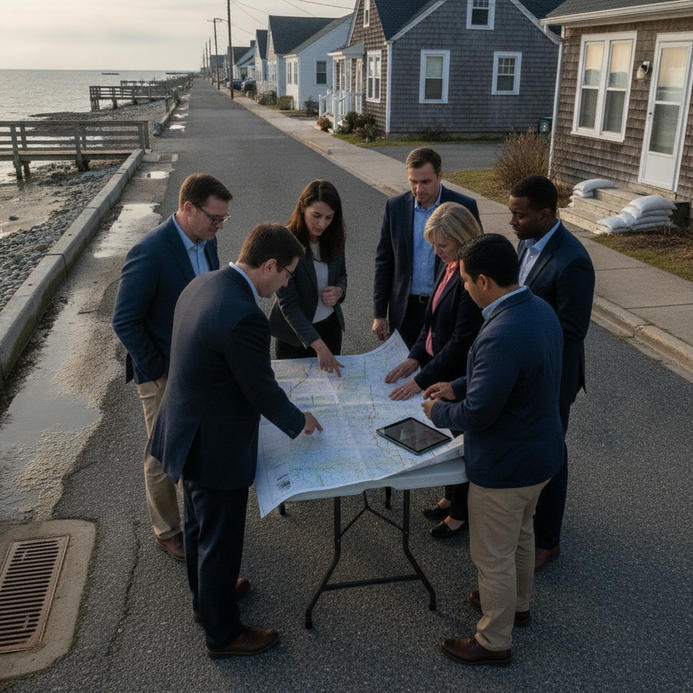
Take a walk around your community, or use a simple map to mark these assets. Talk to staff who maintain these systems, often, they’ll know where the weak spots are. For example, the town public works manager might point out an old pump station that always struggles during heavy rain, or a bridge that’s been closed for repairs after the last hurricane.
It’s not just about buildings. Think about natural features, too. A park that floods easily may be a key community space. Some towns have historic districts or older neighborhoods that are more vulnerable because of their age or location. The trick is to see your infrastructure through a climate risk lens: What would happen if this asset failed? Who would be affected? How long would it take to fix?
Assessing Risks and Prioritizing Investments
Now that you’ve identified hazards and assets, the next step is connecting the dots. Assessing risk means thinking about how likely a problem is, how bad it would be, and how quickly you could bounce back. If your only access road floods every spring, that’s a high-priority issue. If a less-used park trail erodes slowly, it might be lower risk for now.
One simple tool is a risk matrix. List each asset and rate its exposure (how likely it is to be affected), its importance to the community, and how hard it would be to repair or replace. For example:
- The main bridge is exposed to flooding every hurricane season, is essential for emergency access, and would take months to repair. High risk.
- A parking lot near a creek floods once in a while but isn’t essential. Lower risk.
- The town’s water treatment plant sits near the shoreline and could be damaged by saltwater intrusion, a long-term, medium-to-high risk.
Prioritizing investments is key, especially when budgets are tight. Focus on projects that protect the most residents or keep critical services running. Sometimes, low-cost upgrades can make a big difference. Raising electrical panels, sealing up basement utility rooms, or installing simple backflow valves can protect key buildings from the next storm. In other cases, bigger projects, like building seawalls, relocating roads, or upgrading pump stations, require careful planning, outside funding, and sometimes a regional approach.
An example from North Carolina: After repeated flooding, one coastal town installed simple water level sensors in storm drains and raised electrical transformers in its downtown area. These changes cost a fraction of a major overhaul but kept businesses open during the next flood event. Small steps can have a big impact, especially when they’re chosen based on a thoughtful risk assessment.
Exploring Protective Measures: Nature-Based and Engineered Options
How do you actually protect your town? There’s no one-size-fits-all answer. Most coastal municipalities use a blend of nature-based solutions and engineered structures, each with their own strengths.
Nature-based measures use the environment to absorb or slow down water. Planting dune grass, restoring marshes, or building oyster reefs can buffer storm surge, reduce erosion, and provide habitat for wildlife. For instance, living shorelines, natural barriers made of native plants and rocks, have helped towns like Annapolis, Maryland, cut down on waterfront erosion while supporting birds and fish.
Engineered options include levees, seawalls, tide gates, or reinforced drainage systems. These structures are designed to stand up to big storms and heavy flooding. They can be expensive and require regular maintenance, but they’re sometimes the only way to protect critical infrastructure. A good example: Galveston, Texas, built a large seawall after the devastating hurricane of 1900. It’s protected the city from major storms ever since, but upkeep is a constant effort.
Most towns find a mix works best. Imagine your main road runs close to the beach and floods often. You could:
- Elevate the road a few feet above flood level, keeping traffic moving during storms.
- Restore dunes or plant new vegetation between the road and the water, helping absorb waves and trap sand.
- Install a tide gate at stormwater outfalls to keep seawater from backing up into the drainage system.
Some towns even add small rain gardens or bioswales, shallow, planted ditches along roads, to soak up heavy rain. These green features can double as community beautification projects, turning problem spots into attractive spaces. The right mix depends on your budget, the severity of the risks, and what your community values most. Always remember to consider long-term maintenance: a shiny new structure is only helpful if you can afford to keep it in good shape over time.
Integrating Climate Risks into Municipal Planning
Climate resilience isn’t a project you finish and forget. It should become part of your regular planning process, showing up in land-use plans, capital improvement schedules, and even emergency management updates.
Start by adding climate risks into your town’s long-term plans. When updating zoning maps or deciding where to allow new homes and businesses, avoid areas that flood regularly or are eroding quickly. During capital improvement planning, look for opportunities to build resilience into routine upgrades. For example, if you’re replacing old water pipes, consider using materials that won’t corrode in salty conditions, or reroute them out of flood-prone streets.
Municipal climate action plans are helpful here. These documents spell out specific goals for reducing climate risks, outline steps for adaptation, and assign responsibility for each task. They’re also a great way to show state and federal agencies that your town is organized and ready for grant funding.
When you integrate climate thinking into everyday decisions, like which roads to repave or where to plant trees, you build resilience piece by piece. Over time, these small choices add up, making your town stronger and better prepared for whatever the weather brings.
Planning for Emergency Response and Recovery
Even the best resilience plan can’t stop every storm or flood. That’s why clear emergency response and recovery plans are a must.
First, make sure everyone knows their roles. Who decides when to close the main road? How do you get emergency alerts to residents, especially those who might not have internet access? Regular drills help staff and volunteers practice, so they’re ready when real emergencies happen.
Think about recovery, too. After an event, what’s the first step? Usually, it’s restoring power, clearing debris, and checking on vulnerable residents, like seniors or people with disabilities. Make simple checklists and update them after each storm season. Some towns use text message systems or radio announcements to keep everyone informed.
It’s smart to build relationships with neighboring towns and larger agencies ahead of time. When a hurricane hits, you may need help with search and rescue, debris removal, or temporary shelters. Mutual aid agreements, basic written promises to help each other, save time and confusion during a crisis.
A practical example: After Hurricane Sandy, several New Jersey towns quickly restored power and reopened roads by using pre-existing agreements with regional utility crews and neighboring fire departments. Planning together pays off when time is critical.
Budgeting, Coordination, and Community Engagement
Building climate resilience takes planning, coordination, and realistic budgeting. Many small towns face tight budgets, so it’s important to look for outside funding and prioritize projects with the biggest impact for the community.
Start by identifying what you can do with existing resources. Maybe your staff can install rain gardens, or volunteers can help plant dune grass. For bigger projects, look for state and federal grants focused on climate adaptation for coastal municipalities. Programs from FEMA, the EPA, or state emergency offices often provide matching funds for resilience projects.
Coordination is just as important as money. Assign clear roles for each project, and make sure everyone knows who’s responsible for updates, maintenance, and reporting. Regular check-ins, monthly or quarterly, help keep projects on track and allow you to adapt when conditions change.
Don’t forget about the community. Hold public meetings or send out surveys to see what residents care about most. Sometimes, local knowledge reveals risks that outside experts might miss. For example, a longtime resident might know that a particular street always floods on a certain tide, or that a back road is the only way out during a storm.
Engaging the community also helps build buy-in. When people understand what’s being done and why, they’re more likely to support new projects or volunteer their time. In some towns, volunteers have helped restore wetlands, staff emergency shelters, or spread the word about evacuation plans. This kind of involvement strengthens community spirit, and resilience.
Expert support is also available. Membership communities and referral networks, such as those offered by Municipal Expert Services, connect you with technical experts, grant writers, and other towns facing similar challenges. These partnerships can save time, stretch budgets, and bring in fresh ideas.
Finally, make sure there’s a process for keeping plans and projects updated. Assign someone to lead reviews after every major event, or at least once a year, to track progress and adjust strategies as needed. Resilience isn’t a one-time effort, it’s an ongoing process.
Legal Tools and Policy Levers for Resilience
Coastal municipalities have more tools at their disposal than just sandbags and seawalls. Legal and policy decisions can shape how your town grows, what gets protected, and how residents are supported.
For example, zoning laws can prevent new construction in high-risk flood zones, keeping future buildings out of harm’s way. Some towns use buyout programs, offering homeowners in the most dangerous areas a chance to relocate before the next disaster.
Eminent domain, where a municipality acquires private property for public use, can be a last-resort tool to protect public safety, like moving a key utility station out of a floodplain. This process can be complicated and emotional, so it helps to have legal experts who understand both the technical and human sides of the issue. If you’re considering this step, our Eminent Domain Advisory service can offer guidance that’s fair and practical.
Other policies, like requiring new developments to include green infrastructure or creating incentives for home elevation projects, can shift the whole community toward greater resilience. The key is to make policy changes transparent and involve residents in decisions whenever possible. Clear communication builds trust and reduces pushback.