Every small town faces the challenge of making sure local government departments work together smoothly. When communication breaks down or teams operate in silos, important projects stall and community goals get lost in the shuffle. If you’re a mayor, administrator, or local official, you’ve probably wondered how to keep everyone rowing in the same direction. This guide explores proven municipal collaboration strategies to help your municipality improve interdepartmental coordination, keep projects on track, and better serve your community.
Why Interdepartmental Coordination Matters
When departments share information and align their efforts, towns see real benefits. Streets get repaired faster, events run more smoothly, and resources are used where they matter most. But it’s not always easy. Each department has its own priorities, and it’s common for teams to fall into routines that don’t always fit the bigger picture. That’s why focusing on municipal collaboration strategies makes sense, whether your town has a few dozen employees or just a handful.
Common Coordination Challenges Small Municipalities Face
Even the most dedicated teams can run into roadblocks. What gets in the way of strong interdepartmental coordination?
- Siloed information. Departments sometimes keep important data to themselves, making it hard for others to do their jobs.
- Unclear ownership. When it’s not obvious who’s in charge of a task, things slip through the cracks.
- Duplicated efforts. Different teams might be working on the same problem without realizing it, wasting time and money.
- Competing priorities. One department’s urgent project might not line up with another’s schedule.
- Communication gaps. Without regular updates, important details get lost or misunderstood.
Not every town faces all these challenges, but most have seen one or two pop up from time to time. The good news? You can address them without overhauling your entire organization.
Defining Departmental Roles and Responsibilities
Clear roles are the foundation of good teamwork. If you want departments to collaborate, everyone needs to know who does what, and where to turn with questions.
Start by mapping out each department’s main duties. Document what’s unique to each team versus what overlaps. This doesn’t need to be a complicated chart, sometimes a simple list or shared document works best. Once you’ve clarified responsibilities, share this information with all staff, not just department heads. Clear visibility helps prevent duplicated efforts and confusion.
It’s also smart to set up a process for updating these roles as new challenges arise. Maybe your town adds a new program or takes on a special project. Make sure everyone knows who’s leading and who’s supporting, right from the start.
Establishing Consistent Communication Channels
Communication is the heart of any effective municipal collaboration strategy. If departments only talk when something’s on fire, that’s a recipe for missed opportunities and stress.
Consider setting up regular check-ins. For some towns, this could be a weekly department head meeting. Others might use shared online tools to post progress updates or flag issues. The key is consistency, choose a system that fits your team’s size and culture, then stick to it.
It’s not just about meetings, either. Encourage quick questions and informal chats between departments. Sometimes a phone call or a quick hallway conversation can solve problems faster than a formal memo.
Sharing Information and Resources
Many towns struggle with information living in separate “buckets.” Maybe the public works team has road maintenance schedules, but the parks department isn’t aware of upcoming closures. Or the finance office has key budget numbers that other teams need to plan projects.
One practical way to break down these barriers is to create shared digital folders or drives where all departments can access relevant documents. If you’re not sure where to start, pick one project and try sharing all related files in a single spot. See how it goes, then expand to other areas.
Resource sharing isn’t just about files, either. Think about equipment, vehicles, or even staff expertise. For example, if your IT person has time, could they help another department set up a new system? Little wins like these can build trust and keep everyone moving forward.
Coordinating Projects That Cross Departments
Some of the most important town projects need input from several teams. For example, fixing a downtown sidewalk might involve public works, planning, and even local business outreach. The trick is making sure everyone knows the plan and their part in it.
Start by bringing the right people to the table early. Set up a kickoff meeting where every department involved can share their needs and concerns. Use a simple project plan that lists tasks, deadlines, and who’s responsible for each step. Check in regularly as the project moves forward so nothing gets overlooked.
When things get complicated, don’t be afraid to ask for outside support. Sometimes an advisor or facilitator can help keep everyone focused and working together.
Setting Shared Goals and Priorities
It’s easy for departments to focus on their own urgent tasks. But the best municipal collaboration strategies help teams see how their work fits into the town’s bigger goals.
Hold a yearly or quarterly planning session with all department heads. Use this time to identify top priorities for the whole town, not just individual departments. Agree on a few key projects that everyone will support. This creates a sense of shared ownership and helps avoid turf wars over resources.
Keep these shared goals visible. Post them in common areas or include progress updates in regular meetings. When teams see how their daily work connects to community priorities, they’re more likely to pull together.
Clarifying Decision-Making and Escalation Processes
Confusion over who can make decisions can stall progress. Make sure there’s a clear process for how decisions are made, especially for projects that cut across departments.
Outline who has the final say on joint projects. For example, maybe the town administrator signs off on anything involving two or more teams. Also, define how disagreements get resolved. Sometimes a simple escalation path, like bringing issues to a standing working group, prevents small conflicts from becoming big problems.
Document these processes in writing and review them with staff. When everyone knows the rules, projects move along with fewer hiccups.
Using Cross-Department Meetings and Working Groups
Regular meetings that bring multiple departments together can do wonders for teamwork. The format depends on your town’s size. Some communities hold monthly “all hands” meetings. Others set up smaller project-based working groups that meet as needed.
These meetings are most effective when they have a clear agenda and a real purpose. Focus on projects or topics that need cross-department input. Use the time to share updates, surface any issues, and celebrate joint wins. Don’t let the meetings become just another item on the calendar, make them count.
Image placeholder: A small-town council chamber with leaders from different departments discussing a project together. AI image prompt: A council chamber scene showing municipal officials from various departments sitting at a round table, reviewing project plans and having a collaborative discussion. The atmosphere should be positive and productive, reflecting teamwork.

How Leaders Can Identify and Close Coordination Gaps
Before you can fix coordination issues, you need to spot them. Start by asking staff where they see overlaps, bottlenecks, or confusion about roles. Anonymous surveys or informal check-ins can reveal hidden pain points.
Walk through recent projects and look for signs of duplicated work, missed deadlines, or unclear responsibilities. If a project ran into trouble, dig into why. Was there a misunderstanding between departments? Did someone lack the information they needed?
Once you’ve identified a gap, work with the teams involved to map out a clearer workflow. Document who’s responsible for each step, what information needs to be shared, and how updates will be communicated. Set a date to review how the new process is working, and adjust as needed.
Tracking progress is key. Consider creating a simple dashboard or checklist to monitor whether collaboration is improving. Celebrate small wins and keep the conversation going, no one gets it perfect right away.
Making Collaboration a Habit, Not a One-Time Project
The best municipal collaboration strategies aren’t one-off fixes, they become part of your town’s culture. Remind teams that working together isn’t just about efficiency. It’s about delivering better results for the people who live and work in your community.
Encourage staff to share ideas for improving teamwork, and reward departments that make collaboration a priority. Over time, you’ll see fewer silos, smoother projects, and a stronger sense of shared mission.
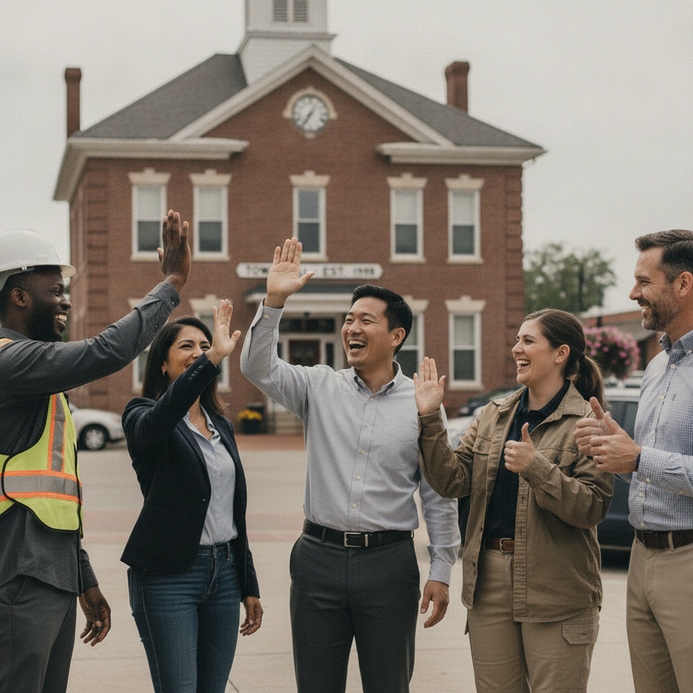
Image placeholder: A group of municipal employees from different departments smiling and high-fiving after completing a successful joint project. AI image prompt: Municipal workers from various departments gathered outside a small-town building, smiling and giving high-fives, celebrating successful teamwork. The mood is upbeat and community-focused.
Conclusion
Small towns thrive when their departments work together with purpose and clarity. By putting municipal collaboration strategies in place, like clear roles, regular communication, and shared goals, you’ll see stronger teamwork and better results for your community. Want help building a culture of collaboration in your municipality? Talk to our team at municipalexpertservices.com.